Between the navel and the knee?
Getting your Trinity Audio player ready...
|
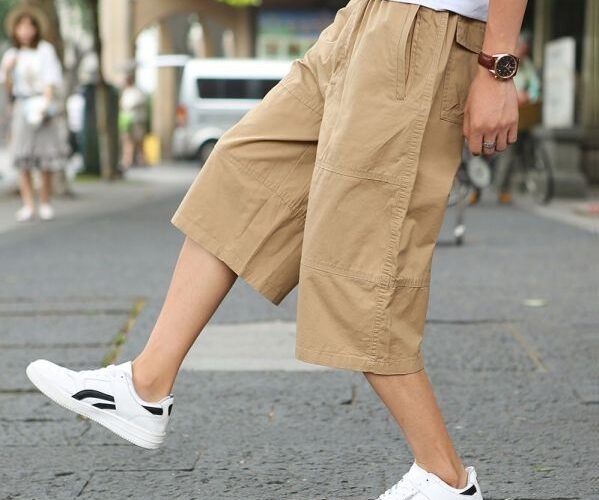
An interesting video was recently posted by Maria Akbar from 5Pillars on social media reminding ‘Muslim brothers’ to cover their ‘awrah during the recent heatwave. Notably as Maria Akbar and others have alluded to, the discussion tends to feature as part of the debate on general clothing requirements, with many deciding to wear shorts this summer. While the short video post itself can be commended for its value in seeking a little role-reversal, the nature of the content that it expressed is not necessarily as clear cut as she and many others would claim. Indeed, reaction to the content has sparked some intriguing debate. There has been some push back noting that the matter of male ‘awrah – the area that is required to be covered, has had some considerable disagreement amongst Muslim scholars throughout the ages. Quite often though a thorough return to the textual evidences have been lacking. Discussions on this topic seem to centre almost exclusively around the stated adoptions and opinions from the legal schools, as well as from Ibn Taymiyyah, without necessarily always setting out what the textual evidences on this subject say.
One can argue that the ‘maximilist position,’ namely that taken by the majority of the legal schools in arguing that the male ‘awrah is from the navel to the knee, has more awareness concerning it. Thus within the realm of public debate, often the fallback position is to state unequivocally that the male ‘awrah is ‘between the navel and the knee.’ But there is in fact a ‘minimalist position,’ that is all too often completely overlooked.
To help balance the debate and also show the ‘minimalist position’ on this topic in full, we present a translation of the relevant sections from al-Muḥalla bil’Athār by the renowned jurist of classical Islamic Spain, Ibn Ḥazm. The topic is not necessarily as straightforward as many would think it is and the positions that the various legal schools have adopted is not so rooted in the authentic Prophetic Sunnah as many would like to assume. In short, Ibn Ḥazm takes the view, which one could argue is ‘minimalist,’ is that the male ‘awrah is limited to the genitalia and the rear. Notably, he argues at length that neither the navel, the knee, nor even the thigh is part of the male ‘awrah. Here it is not soley a matter of challenging the veracity of the aḥādith on this topic, which he does in typically sharp analytical fashion, but he also demonstrates lucid examples from the Ṣaḥīḥ aḥādith to argue for exclusion of these areas altogether.
Also covered in these sections from al-Muḥalla is the ‘awrah as it relates to women. While this is not necessarily a contentious issue from the vantagepoint of classical Islamic fiqh, many in the modern era will be perhaps surprised to learn that he challenges altogether the notion that a women is to cover her face – by face veiling, or the niqāb. Admittedly, there is actually very little within the Islamic corpus of evidences on this matter of the niqāb, and the few isolated sporadic references that do exist, albeit often weak, do not show it is a matter of general requirement, encouragment or even commandment.
While the topic itself is often situation in fiqh discussions related to the requirement to cover the ‘awrah for Ṣalāḥ, it retains probative value in itself as a topic of wider applicability. The bulk of the analysis from al-Muḥalla is situation in Kitāb al–Ṣalāh (the book of prayer) issue no. 349.[1] For greater context though, we’ve also included the two preceding issues, as well as an excerpt from the one which follows it. This sits in addition to the previous selected issues that we have made available elsewhere on our website from Kitāb al–Ṣalāh.

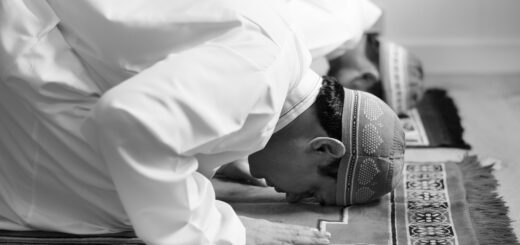
Readers should be mindful though that one simply cannot approach the Ṣalāḥ wearing a pair of speedos like an Olympic swimmer and think that all the requirements and etiquette of the Ṣalāḥ have been met. Neither can one enter most masajid in the UK, which are largely Ḥanafi in outlook with shorts above the knee and not expect some pushback from other attendees. The essential practical points arising from the chapters in al-Muḥalla is that if one is wearing shorts and those ‘ride up’ slightly during the course of the Ṣalāh either during the rukū or being seated and show the knee or a portion of the lower thigh, that they do not necessarily invalidate the Ṣalāh in its entirety. Additionally, walking about outside and carrying on one’s daily activities while wearing a pair of shorts that are above the knee and/or showing a portion of the lower thigh, doesn’t necessarily mean one is deliberately or intentionally ‘exposing’ one’s ‘awrah.
Issue no. 346: The matter of covering the ‘awrah
The matter of covering the ‘awrah, is farḍ (obligated), from the view of the onlooker and in the Ṣalāh generally, regardless of whether anyone is present or not. Allah the Exalted said:
قُلْ لِلْمُؤْمِنِينَ يَغُضُّوا مِنْ أَبْصَارِهِمْ وَيَحْفَظُوا فُرُوجَهُمْ
Tell believing men to lower their glances and guard their private parts.[2]
وَقُلْ لِلْمُؤْمِنَاتِ يَغْضُضْنَ مِنْ أَبْصَارِهِنَّ وَيَحْفَظْنَ فُرُوجَهُنَّ
And tell believing women that they should lower their glances, guard their private parts.[3]
Thus, whomsoever exposes their private parts to anyone other than those with whom it is permitted, (they have) disobeyed Allah the Exalted. He the Exalted said:
خُذُوا زِينَتَكُمْ عِنْدَ كُلِّ مَسْجِدٍ
(Children of Adam) dress well whenever you are at worship.[4]
Is it agreed that it is (in relation to) covering the ‘awrah.
Issue no. 347: Not finding an item of clothing to cover one’s ‘awrah during the Ṣalāh
Not finding an item of clothing to cover one’s ‘awrah during the Ṣalāh. (Issue) this applies only to the one who acts intentionally. Regarding one cannot find an item of clothing, or one who is under duress, or forgets, the Ṣalāh is valid, given that Allah the Almighty says:
لا يُكَلِّفُ اللَّهُ نَفْسًا إِلا وُسْعَهَا
Allah does not burden any soul with more than it can bear.[5]
And where He the Exalted says:
وَلَيْسَ عَلَيْكُمْ جُنَاحٌ فِيمَا أَخْطَأْتُمْ بِهِ وَلَكِنْ مَا تَعَمَّدَتْ قُلُوبُكُمْ
You will not be blamed if you make a mistake, only for what your hearts deliberately intend.[6]
(Furthermore) given the saying of where the Messenger of Allah, peace and blessings be upon him said: ‘My Ummah has been excused for mistakes, forgetfulness, and what they are forced into.’[7] Except however the ruling concerning voiding what he has already performed of the obligatory acts of his Ṣalāḥ while his ‘awrah was uncovered due to forgetfulness, repeating those acts as he was commanded, and then building upon what he had prayed while his ʿawrah was covered. (Moreover) and performing the sujūd al-sahw (prostration of forgetfulness); the validity of the Ṣalāḥ he has performed in that manner during a point in his Ṣalāḥ which, if he were to omit it, his Ṣalāḥ would nevertheless be complete; and performing the sujūd al-sahw on account of that, is as we have stated regarding the Ṣalāḥ of one who has not avoided something that we have been obligated to avoid. (Hence) there is no difference whatsoever between the two, for the reasons we mentioned there. And with Allah is all tawfeeq.
Issue no. 348: If one starts the Takbir while the ‘awrah is exposed
If one starts the Takbir while the ‘awrah is exposed, or while one hasn’t avoided something which one is required to avoid, be that deliberately, out of forgetfulness or from ignorance, one therefore does not have (a valid) Ṣalāḥ. (This is) because they didn’t enter the Ṣalāḥ in the appropriate manner which they were commanded to do, and nothing of that Ṣalāh is valid for them upon which the remainder of the Ṣalāh can be established. It is not permissible in the Ṣalāh to bring forward something which is supposed to come later, before that which precedes it in its prescribed order, because the Messenger of Allah peace and blessings be upon him said: ‘Whoever performs an act for which we have not commanded, it is rejected.’[8]
Issue no. 349: Concerning the ‘awrah which is obligatory to cover from the gaze of an onlooker
Concerning the ‘awrah which is obligatory to cover from the gaze of an onlooker and during the Ṣalāh (is as follows), for the man, it is only the genitalia and the anus; the thigh isn’t considered as being part of his ‘awrah. For the woman, it is her entire body, bar the exceptions of the hands and the face.[9] Regarding the free man and the slave, and the free woman and the female slave, all are judged the same in all of that, and there is no difference between them.
حدثنا عبد الله بن يوسف ثنا أحمد بن فتح ثنا عبد الوهاب بن عيسى ثنا أحمد بن محمد ثنا أحمد بن علي ثنا ابن الحجاج ثنا سعيد بن يحيى الأموي ثنا أبي ثنا عثمان بن حكيم بن عباد بن حنيف الأنصاري ثنا أبو أمامة بن سهل بن حنيف عن المسور بن مخرمة قال أقبلت بحجر ثقيل أحمله وعلي إزار خفيف، فانحل إزاري ومعي الحجر لم أستطع أن أمنعه حتى بلغت به إلى موضع فقال رسول الله صلى الله عليه وسلم ارجع إلى إزارك فخذه، ولا تمشوا عراة
Abdullah ibn Yusuf narrated it to us Aḥmad ibn Fatḥ narrated to us ‘Abd-al-Wahāb ibn Esa narrated to us Aḥmad ibn Muḥammad narrated to us Aḥmad ibn Ali narrated to us Ibn al-Ḥajjāj narrated to us Sa’eed ibn Yaḥya al-Umawy narrated to us my father narrated to us Uthmān ibn Ḥakeem ibn ‘Abbān ibn Ḥunayf al-Anṣāri narrated to us Abu Umāmah ibn Sahl ibn Ḥunayf narrated to us from al-Miswar ibn Makhrama, he said: ‘I was carrying a heavy stone, and my lower garment was loose, and it therefore slipped off (so soon) that I could not place the stone (on the ground) and carry to its proper place. Upon this the Messenger of Allah peace and blessings be upon him said: Return to your izār (and tie it around your waist) and do not walk naked.’[10]
With regards to the thigh, in fact (the following is narrated):
فإن عبد الرحمن بن عبد الله بن خالد حدثنا قال ثنا إبراهيم بن أحمد ثنا الفربري ثنا البخاري ثنا يعقوب بن إبراهيم حدثني ابن علية هو إسماعيل بن إبراهيم ثنا عبد العزيز بن صهيب عن أنس بن مالك أن رسول الله صلى الله عليه وسلم غزا خيبر، فصلينا عندها صلاة الغداة بغلس فركب رسول الله صلى الله عليه وسلم وركب أبو طلحة وأنا رديف أبي طلحة فأجرى رسول الله صلى الله عليه وسلم في زقاق خيبر، وإن ركبتي لتمس فخذ النبي صلى الله عليه وسلم ثم حسر الإزار عن فخذه، حتى إني أنظر إلى بياض فخذ النبي صلى الله عليه وسلم
‘Abd al-Raḥman ibn Abdullah ibn Khālid narrated to us, he said Ibrāhim ibn Aḥmad narrated to us al-Firabry narrated to us al-Bukhāri narrated to us Ya’qub ibn Ibrāhim narrated to us Ibn ‘Ulayah narrated to me, he is Ismā’il ibn Ibrāhim, ‘Abd al-Aziz ibn Ṣuhayb narrated to us from Anas ibn Mālik, that the Messenger of Allah, peace and blessings be upon him raided Khaybar. One morning we offered prayers in the darkness of early dawn. Then the Messenger of Allah peace and blessings be upon him took his mount. Abu Ṭālḥa mounted also and I mounted behind him on the same horse. The Messenger of Allah, peace and blessings be upon him rode through the streets of Khaybar and (I rode so close to him) that my knee touched the thigh of the Prophet, peace and blessings be upon him and it uncovered his thigh and I could see its whiteness.[11]
Thereafter, the remainder of the ḥadith is mentioned. Ali (Ibn Ḥazm) said: Consequently, it is authentically established that the thigh is not considered as being part of the (male) ‘awrah. Indeed, had it been considered part of the (male) ‘awrah, Allah the Mighty and Sublime wouldn’t have allowed this to have been seen of His Messenger, peace and blessings be upon him; (for he is) al-Muṭahhar al-Ma’ṣum (purified and rendered infallible), before the people during the tenure of his Prophethood and Messengership. Nor for that matter, would Anas ibn Mālik or anyone else have seen it. In fact, the Almighty had protected him from his ‘awrah being exposed even before his commissioning into Prophethood and during his childhood, as the following shows:
حدثنا عبد الله بن يوسف ثنا أحمد بن فتح ثنا عبد الوهاب بن عيسى ثنا أحمد بن محمد ثنا أحمد بن علي ثنا مسلم بن الحجاج ثنا زهير بن حرب ثنا روح بن عبادة ثنا زكريا بن إسحاق ثنا عمرو بن دينار قال سمعت جابر بن عبد الله يحدث أن رسول الله صلى الله عليه وسلم كان ينقل معهم الحجارة للكعبة وعليه إزاره، فقال له العباس عمه: يا ابن أخي، لو حللت إزارك فجعلته على منكبك دون الحجارة قال فحله وجعله على منكبه فسقط مغشيا عليه، فما رئي بعد ذلك اليوم عريانا
Abdullah ibn Yusuf narrated to us Aḥmad ibn Fatḥ narrated to us ‘Abd-al-Wahāb ibn Esa narrated to us Aḥmad ibn Muḥammad narrated to us Aḥmad ibn Ali narrated to us Muslim ibn al-Ḥajjāj narrated to us Zuhayr ibn Ḥarb narrated to us Rawḥ ibn ‘Ubādah narrated to us Zakariyā ibn Isḥāq narrated to us ‘Amr ibn Dinār narrated to us he said I heard Jābir ibn Abdullah narrated that the Messenger of Allah, peace and blessings be upon him was carrying stones (along) with the people of Mecca for (the building of) the Ka’ba wearing an Izār (waist-sheet cover); his uncle al-‘Abbās said to him, ‘O my nephew! (It would be better) if you take off your Izār and put it over your shoulders underneath the stones.’ So, he took off his Izār and put it over his shoulders, but he fell unconscious and since then he had never been seen naked.[12]
حدثنا حماد ثنا ابن مفرج ثنا ابن الأعرابي ثنا الفربري ثنا عبد الرزاق ثنا ابن جريج أخبرني عمرو بن دينار أنه سمع جابر بن عبد الله يحدث أن رسول الله صلى الله عليه وسلم لما بنيت الكعبة ذهب هو وعباس ينقلان الحجارة فقال عباس لرسول الله صلى الله عليه وسلم اجعل إزارك على رقبتك من الحجارة ففعل، فخر إلى الأرض وطمحت عيناه إلى السماء ثم قام فقال إزاري إزاري فشد عليه إزاره
Ḥammād narrated to us Ibn Muffarij narrated to us Ibn al-‘Arābi narrated to us al-Firabry narrated to us ‘Abd al-Razzāq narrated to us Ibn Jurayj narrated to us ‘Amr ibn Dinār reported to me that he heard Jābir ibn Abdullah narrate that when the Ka’ba was being built the Messenger of Allah, peace and blessings be upon him went with al-‘Abbās to carry stones. Al-‘Abbās said to the Messenger of Allah peace and blessings be upon him, ‘Place your Izār around your neck to protect yourself from the stones.’ So, he did that. He then fell to the ground, and his eyes gazed upward toward the sky. Then he stood up and said: ‘My Izār! My Izār!’ So, he fastened his Izār securely around himself.[13]
وحدثنا عبد الله بن يوسف ثنا أحمد بن فتح ثنا عبد الوهاب بن عيسى ثنا أحمد بن محمد ثنا أحمد بن علي ثنا مسلم بن الحجاج ثنا زهير بن حرب ثنا إسماعيل بن إبراهيم هو ابن علية – ثنا أيوب السختياني عن أبي العالية البراء قال إن عبد الله بن الصامت ضرب فخذي وقال إني سألت أبا ذر فضرب فخذي كما ضربت فخذك وقال إني سألت رسول الله صلى الله عليه وسلم كما سألتني فضرب فخذي كما ضربت فخذك وقال صل الصلاة لوقتها فإن أدركتك الصلاة معهم فصل ولا تقل إني قد صليت فلا أصلي
Abdullah ibn Yusuf narrated to us Aḥmad ibn Fatḥ narrated to us ‘Abd-al-Wahāb ibn Esa narrated to us Aḥmad ibn Muḥammad narrated to us Aḥmad ibn Ali narrated to us Muslim ibn al-Ḥajjāj narrated to us Zuhayr ibn Ḥarb narrated to us Ismā’il ibn Ibrāhim narrated to us, he is Ibn ‘Ulaya; Ayub al-Sakhtiyāni narrated to us from Abul’Aliyah al-Barā’ he said ‘Abdullah ibn al-Ṣāmit struck me on the thigh and said to me I asked Abu Dharr the same question you asked me, and he struck me on the thigh as I struck you on the thigh and said: I asked the Messenger of Allah peace and blessings be upon him the same question as you have asked me and he struck me on the thigh as I have struck you on the thigh and said: Offer the prayer on time, and if you catch up with them, then pray with them, and do not say I have already prayed so I will not pray.’
(From the foregoing discussion) if the thigh were considered ‘awrah the Messenger of Allah peace and blessings be upon him wouldn’t have touched it with his sacred hand, as shown by the case of Abu Dharr. And if the thigh were considered ‘awrah by Abu Dharr, he wouldn’t have struck it with his hand; similar applies to that concerning Abdullah ibn al-Ṣāmit and Abul’Aliyah. No Muslim considers it lawful to strike the genitalia of another with his hand; nor for that matter, the anus of another person, even if it is over clothing, nor the body of a foreign woman, even if it is over the clothing under any circumstances whatsoever. The Messenger of Allah peace and blessings be upon him has prohibited retaliation in kind for al-Kis’ah, which is striking the buttocks (of another) over clothing with the sole of the foot. He said, ‘Leave it, for it is reprehensible.’[14]
If they were to say, ‘the stone took away the clothing of Musa peace be upon him so that Bani Isra’eel saw that he wasn’t afflicted with any deformity.’ In reply, we would say yes, (but) you haven’t got any established proof in this matter for two reasons. Firstly, we don’t have in our possession any conclusive evidence that the uncovering of the private parts was prohibited in the Sharī’ah of Musa, peace be upon him. Indeed, in that very same report it is stated that Bani Isra’eel used to (openly) bathe naked, yet Musa, peace be upon him was bathing in seclusion. It has not been reliably reported that he forbade them from this practice. He could have simply concealed himself from them because of modestly, just as the Messenger of Allah, peace and blessings be upon him, concealed his leg out of modesty in the presence of Uthmān, yet no one considers the leg of a man to be ‘awrah per se. Secondly, the report doesn’t expressly state that they (Bani Isra’eel) saw Musa’s genitalia, the part which constitutes the ‘awrah. What they saw established that he didn’t have the ailment which some were accusing him of having. This would be apparent to anyone looking, without any doubt, without his seeing anything of the genitalia itself, but simply by seeing the area between the thighs to be unobstructed. Thus, their reliance upon this report as evidence is invalid. And if they cite the weak reports concerning the thigh being ‘awrah, they are all invalid.
As for the ḥadith of Juwaybir, it is narrated from Ibn Jawhar, and he is majhul (unknown, anonymous) and from (other narrators) who are (graded) majhul, and (with channels that are) munqaṭi.[15] And from the reporting channel of ‘Amr ibn Shu’ayb from his father from his grandfather, it is a Ṣaḥifa; we have mentioned in more than one place in this subject, matters that they themselves do not accept.[16] For example, his narration from his father, from his grandfather, that the Messenger of Allah peace and blessings be upon him decreed that any child whose paternity is established after the death of the father to whom he is attributed, and whose heirs claim him, shall be affiliated with the man who claims him, if the child was born to a slave woman whom he owned on the day he had intercourse with her. However, the child has no share of any inheritance that was distributed before his affiliation was established. Whatever inheritance he reaches that has not yet been distributed, he is entitled to his share of it. But he is not affiliated with that man if the child’s alleged father had denied him [during his lifetime].[17] Similarly, his narration through this chain as musnad, in which he mentioned performing wuḍu’ three times each, saying: ‘This is how ablution is performed. Whoever adds to this or decreases from it has done wrong and acted unjustly.’[18] And furthermore, that he peace and blessings be upon him forbade forming circles [of people] before the Friday prayer.[19]
And that a woman has no authority over her property if her husband dies while she is still under his marital protection. And (finally) that he (peace and blessings be upon him) judged concerning an eye that remains intact but is obstructed in its place that compensation for it is one-third of the diyah.[20] Indeed, there are very many examples of this kind.
Regarding the thigh constituting the ‘awrah as per the reporting pathway of Qabeeṣah ibn Mukhāriq, (the channel) contains (the narrators) Sulaymān ibn Sulaymān, Muḥammad ibn ‘Uqbah and Jarir ibn Qaṭān; these narrators are majhul, it is not known who they are.[21] As per the reporting pathway of Ibn Jaḥsh, within it (i.e. the isnād) is Abu Kathir, and he is majhul.[22] Regarding the reporting pathway of Ali, (it is) munqaṭi. It is narrated by Ibn Jurayj from Ḥabeeb ibn Abi Thābit, but he didn’t hear it from him directly. There is a (missing) narrator between the two of them whose identity is unknown. As for the channel of Ḥabeeb ibn Abi Thābit from Aāṣim ibn Ḍamra, he did not hear from him.[23] Ibn Ma’een said: ‘Between them is a man who is not thiqa (trustworthy), it is not narrated from Ibn Jurayj except by way of Abu Khālid, and his identity isn’t known. From the channel of Ibn ‘Abbās, within that is (the narrator) Abu Yaḥya al-Qattāt, and he is ḍaef.[24] (And from another) channel of Ibn ‘Abbās, within that are anonymous narrators whom we do not know about them.’

From the channel of Sufyān al-Thawri, that the Messenger of Allah peace and blessings be upon him (said), this is nothing.[25] Even had none of the established narratives we mentioned thus far come down to us, it would not be lawful to definitively declare a specific body part to be constituting a part of the ‘awrah, such that leaving it exposed invalidates the prayer, except where it is based upon proof that is from the legal texts or ijmā’.
وحدثنا عبد الله بن يوسف ثنا أحمد بن فتح ثنا عبد الوهاب بن عيسى ثنا أحمد بن محمد ثنا أحمد بن علي ثنا مسلم بن الحجاج حدثني أبو بكر بن إسحاق أنا سعيد بن كثير بن عفير ثنا عبد الله بن وهب عن يونس هو ابن يزيد – عن ابن شهاب أخبرني علي بن الحسين أن أباه الحسين بن علي أخبره أن عليا قال كانت لي شارف من نصيبي من المغنم يوم بدر وذكر الحديث
Abdullah ibn Yusuf narrated it to us Aḥmad ibn Fatḥ narrated to us ‘Abd-al-Wahāb ibn Esa narrated to us Aḥmad ibn Muḥammad narrated to us Aḥmad ibn Ali narrated to us Muslim ibn al-Ḥajjāj narrated to us Abu Bakr ibn Isḥāq narrated to me Sa’eed ibn Kathir ibn Ufayr narrated to us Abdullah ibn Wahb narrated to us from Yunus, he is Ibn Yazeed, from Ibn Shihāb, Ali ibn al-Ḥussain reported to me that his father al-Ḥussein ibn Ali reported that Ali said ‘There fell to my lot a she-camel out of the spoils of war on the Day of Badr…’[26]
After which, the remainder of the ḥadith is mentioned. Therein, this records that Ḥamza raised his gaze to the knees of the Messenger of Allah, peace and blessings of Allah be upon him, and then raised his gaze further to his navel. Indeed, had the navel (or knee) been part of the ‘awrah, Allah would not have permitted Ḥamza, or anyone else to look upon that. From the channel of Abu Dāwud:
حدثني مسلم بن إبراهيم ثنا هشام هو الدستوائي عن أبي الزبير عن جابر قال احتجم النبي صلى الله عليه وسلم على وركه من وثء كان به
Muslim ibn Ibrāhim narrated to me Hishām, he is Distawā’ee narrated to us from Abu Zubayr from Jābir he said: ‘The Prophet peace and blessings be upon him had himself cupped above the thigh for a contusion from which he suffered.’[27]
Had the upper thigh been ‘awrah, he (peace be upon him) would not have uncovered it to the individual performing the cupping. This isnād is that which our detractors would love to appropriate for themselves. As for us, we are content with that which is Ṣaḥīḥ and dispense with what we don’t regard as being proper proof. We seek refuge in Allah from citing something as valid proof in one instance while rejecting it in another, driven by taqleed or disregard for the Sharī’ah. Indeed, the position we have stated is the viewpoint held by the majority of the Salaf (pious predecessors). As for the channel of reporting from Muḥammad ibn al-Muthanna:
كما روينا من طريق محمد بن المثنى ثنا سفيان بن عيينة عن محمد بن المنكدر سمع سعيد بن عبد الرحمن بن يربوع يخبر عن جبير بن الحويرث قال رأيت أبا بكر الصديق واقفا على قزح يقول يا أيها الناس أصبحوا، وإني لأنظر إلى فخذه قد انكشف
Sufyān ibn Uyayna narrated to us from Muḥammad ibn Munkadir he heard ‘Abd al-Raḥman ibn Yarbu report from Jubayr ibn al-Huwayrith, he said: I saw Abu Bakr al-Ṣadeeq standing at Quzaḥ, saying, ‘O people, awaken,’ while I observed that his thigh had become exposed.
From the channel of al-Bukhāri:
ثنا عبد الله بن عبد الوهاب هو الحجبي ثنا خالد بن الحارث ثنا ابن عون هو عبد الله عن موسى بن أنس بن مالك فذكر يوم اليمامة فقال أتى أنس إلى ثابت بن قيس بن الشماس وقد حسر عن فخذيه وهو يتحنط
Abdullah ibn ‘Abd al-Wahhāb, he is al-Hajabi, narrated to us Khālid ibn al-Ḥārith narrated to us Ibn ‘Awn, he is Abdullah, narrated to us from Musa ibn Anas ibn Mālik, he mentioned the day of Yamāma and said, ‘Anas went to Thābit ibn Qays ibn Shamās, who had lifted his clothes from his thighs and was applying ‘Ḥunuṭ’ to his body.[28]
Namely, that is the perfumery substances that are used for the dead (i.e. Ḥunuṭ). Al-Bukhāri said ‘Ḥammād narrated it from Thābit from Anas.’ From the channel of Muḥammad ibn Fuḍayl from ‘Aṭā’ ibn al-Sā’ib, who said: ‘I visited Abu Ja’far, namely, Muḥammad ibn ‘Ali ibn al-Ḥusayn ibn Abi Ṭālib, while he was suffering from a fever and he had his thighs uncovered,’ thereafter mentioning the remainder of the report. Among those involved were Abu Bakr, in the presence of the pilgrims, as well as Thābit ibn Qays, Anas, and others. This is also the view held by Ibn Abi Dhi’b, Sufyān al-Thawri, and Abu Sulaymān and it is the stance that we take. With regards to the woman, Allah the Almighty says:
وَلا يُبْدِينَ زِينَتَهُنَّ إِلا مَا ظَهَرَ مِنْهَا وَلْيَضْرِبْنَ بِخُمُرِهِنَّ عَلَى جُيُوبِهِنَّ وَلا يُبْدِينَ زِينَتَهُنَّ إِلا لِبُعُولَتِهِنَّ
And not display their charms beyond what [it is acceptable] to reveal; they should let their headscarves fall to cover their necklines and not reveal their charms except to their husbands.[29]
Up until the point in the verse where He says:
وَلا يَضْرِبْنَ بِأَرْجُلِهِنَّ لِيُعْلَمَ مَا يُخْفِينَ مِنْ زِينَتِهِنَّ
They should not stamp their feet so as to draw attention to any hidden charm.[30]
Allah the Exalted commanded them to draw their khimār over their ‘juyub;’ this text instructs the covering of the ‘awrah, (inclusive of) the neck and the chest. Within that text is the permissibility of not covering the face, other than that it is not possible in origin, and He the Almighty says:
وَلا يَضْرِبْنَ بِأَرْجُلِهِنَّ لِيُعْلَمَ مَا يُخْفِينَ مِنْ زِينَتِهِنَّ
They should not stamp their feet so as to draw attention to any hidden charm.[31]
The text outlines that the legs and feet are among the parts that are to be concealed and not revealed.[32]
وحدثنا عبد الله بن يوسف ثنا أحمد بن فتح ثنا عبد الوهاب بن عيسى ثنا أحمد بن محمد ثنا أحمد بن علي ثنا مسلم بن الحجاج ثنا عمرو الناقد ثنا عيسى بن يونس ثنا هشام عن حفصة بنت سيرين عن أم عطية قالت أمرنا رسول الله صلى الله عليه وسلم أن نخرجهن في الفطر والأضحى العواتق، والحيض، وذوات الخدور. قالت قلت يا رسول الله إحدانا لا يكون لها جلباب قال لتلبسها أختها من جلبابها
Abdullah ibn Yusuf narrated to us Aḥmad ibn Fatḥ narrated to us ‘Abd-al-Wahāb ibn Esa narrated to us Aḥmad ibn Muḥammad narrated to us Aḥmad ibn Ali narrated to us Muslim ibn al-Ḥajjāj narrated to us ‘Amr ibn al-Nāqid narrated to us Esa ibn Yunus narrated to us Hishām narrated to us from Ḥafṣa bint Sireen from Umm ‘Aṭiyah, she said: The Messenger of Allah peace and blessings be upon him commanded us to bring them out for Eid al-Fitr and Eid al-Adha – young women of marriageable age, menstruating women, and women who usually stay in seclusion. She said: I asked, O Messenger of Allah, what if one of us does not have a jilbāb? He replied – Let her sister lend her one jilbāb.[33]
Ali (Ibn Ḥazm) said: This is a command for them to wear the jilbāb for prayer, and jilbāb is the word in the Arabic language in which the Messenger of Allah peace and blessings be upon him addressed us with. It is that (garment of clothing) which covers the entire body, not merely a part of it; thus, what we stated is correct as per the text.
حدثنا عبد الرحمن بن عبد الله بن خالد ثنا إبراهيم بن أحمد ثنا الفربري ثنا البخاري ثنا مسدد ثنا يحيى هو ابن سعيد القطان عن سفيان هو الثوري – أخبرني عبد الرحمن بن عابس قال سمعت ابن عباس يذكر أنه شهد العيد مع رسول الله صلى الله عليه وسلم : وأنه عليه السلام خطب بعد أن صلى، ثم أتى النساء ومعه بلال فوعظهن وذكرهن، وأمرهن أن يتصدقن فرأيتهن يهوين بأيديهن يقذفنه في ثوب بلال
‘Abd al-Raḥman ibn Abdullah ibn Khālid narrated to us, he said Ibrāhim ibn Aḥmad narrated to us al-Firabry narrated to us al-Bukhāri narrated to us Musadad narrated to us Yaḥya, he is Ibn Sa’eed al-Qaḥṭān narrated to us from Sufyān al-Thawri, ‘Abd al-Raḥman ibn ‘Abbās reported to me, he said – I heard Ibn ‘Abbās mention that he attended the Eid prayer with the Messenger of Allah peace and blessings of Allah be upon him. He delivered the sermon after the prayer, then went to the women accompanied by Bilāl, and exhorted and admonished them. He instructed them to give charity, and I saw them reaching out with their hands and casting [their offerings] into Bilāl’s thawb.[34]
By way of this (narrative) Ibn ‘Abbās saw women’s hands in the presence of the Messenger of Allah peace and blessings be upon him; this confirms that a woman’s hands and face are not ‘awrah, whereas covering the rest of the body is obligatory for her.[35]
حدثنا عبد الله بن ربيع ثنا محمد بن معاوية ثنا أحمد بن شعيب ثنا سليمان بن سيف ثنا يعقوب بن إبراهيم بن سعد بن إبراهيم بن عبد الرحمن بن عوف ثنا أبي عن صالح بن كيسان عن ابن شهاب أن سليمان بن يسار أخبره أن ابن عباس أخبره { أن امرأة من خثعم استفتت رسول الله صلى الله عليه وسلم في حجة الوداع
Abdullah ibn Rabi’ah narrated to us Muḥammad ibn Mu’āwiya narrated to us Aḥmad ibn Shu’ayb narrated to us Sulaymān ibn Sayf narrated to us Ya’qub ibn Ibrāhim ibn Sa’d ibn Ibrāhim ibn ‘Abd al-Raḥman ibn ‘Auf narrated to us my father narrated to me from Ṣāliḥ ibn Kaysan from Ibn Shihab, that Sulaymān ibn Yassār reported that Ibn ‘Abbās reported, that a woman from the tribe of Khath’am sought a verdict from the Messenger of Allah peace and blessings of Allah be upon him during the Ḥajjatul-Waddāh’ (the farewell pilgrimage).[36]
And al-Faḍl ibn ‘Abbās was the companion riding behind the Messenger of Allah peace and blessings of Allah be upon him and he mentioned the ḥadith. And within it (i.e. the narration), al-Faḍl began glancing at her, for she was a beautiful woman, while the Messenger of Allah peace and blessings of Allah be upon him kept turning al-Faḍl’s face away to the other side. Had the lady’s face been ‘awrah, he peace be upon him would not have allowed her to keep it uncovered in the presence of people; rather, he would have ordered her to let a cover down over it. Furthermore, had her face been covered, Ibn ‘Abbās would not have known whether she was beautiful or plain. Thus, everything we have stated is confirmed with certainty, and praise is due to Allah in abundancy.[37]
As for the purported difference between the free woman and the female slave, Allah the Almighty’s Deen is one, and their creation and nature are fundamentally the same. All of that applies equally to free women and slave women, unless a legal text establishes a distinction between them regarding a specific matter, in which case that text is to be adhered to. If it is argued that Allah the Almighty says (as per the verse) ‘and not reveal their charms except to their husbands or father,’[38] and that it indicates that He only intended as such for free women, we reply, this is a lie without doubt; for in the Arabic language, the term utilised in the verse [الْبَعْلَ] signifies both a master and a spouse, and furthermore, a female slave may also enter into marriage. We have never known slave women to lack sons, fathers, uncles, be they maternal or paternal, just as free women have them. Yet some have fallen into error regarding the interpretation of Almighty’s saying (in the verse):
يُدْنِينَ عَلَيْهِنَّ مِنْ جَلابِيبِهِنَّ ذَلِكَ أَدْنَى أَنْ يُعْرَفْنَ فَلا يُؤْذَيْنَ
To make their outer garments hang low over them a so as to be recognised and not insulted.[39]
With the notion that Allah the Almighty only commanded this because al-fussāq (the immoral) used to harass women for the purpose of fisq (evil-doing). Therefore, He commanded free women to wear the jilbābs so that the immoral men would recognise that they were free women and would not harass them. Ali (Ibn Ḥazm) said: We utterly disavow this Tafsir that is fassād, which stems from a blunder of a scholar or the momentary lapse of a virtuous, wise person or the false assertion of the lying fāsiq. This is because it implies that Allah the Almighty gave al-fussāq free rein over the honour of Muslim slave women.
This is an eternal calamity, and no two from the people of Islam disagree that taḥreem al-zina (the prohibition of adultery) with a free woman is the same as its prohibition with a slave woman. The punishment for zina with a free woman is the same as the punishment with that of a slave woman, with no difference. Similarly, the prohibition of marriage with a free woman is the same as the prohibition of marriage with a slave woman, with no difference. For this reason and others like it, no one’s statement after the Messenger of Allah, peace and blessings be upon him, should be accepted unless it is attributed to him, peace be upon him.
حدثنا عبد الله بن ربيع ثنا عمر بن عبد الملك ثنا ابن الأعرابي ثنا محمد بن الجارود القطان ثنا عفان بن مسلم ثنا حماد بن زيد ثنا قتادة عن محمد بن سيرين عن صفية بنت الحارث عن عائشة أم المؤمنين أن رسول الله صلى الله عليه وسلم قال لا يقبل الله صلاة حائض إلا بخمار
Abdullah ibn Rabi’ah narrated to us ‘Amr ibn ‘Abd al-Malik narrated to us Ibn al-‘Arābi narrated to us Muḥammad ibn al-Jaroud al-Qaḥṭān narrated to us ‘Affān ibn Muslim narrated to us Ḥammād ibn Zayd narrated to us Qatādah narrated to us from Muḥammad ibn Sireen from Ṣafiya bint al-Ḥārtih from ‘Aisha mother of the believers, that the Messenger of Allah, peace and blessings be upon him said: Allah does not accept the prayer of a woman who has reached puberty unless she wears a khimār.[40]
Ali (Ibn Ḥazm) said: We have also narrated via the channel of Mālik from Muḥammad ibn Abu Bakr, from his mother, that she asked Umm Salamah, the mother of the believers: ‘In what garments should a woman perform the prayer?’ She replied: ‘She should pray wearing a long, full-length dir’ (a loose gown or chemise) that covers the tops of her feet, together with a khimār.’[41] And from the channel of ‘Abd al-Razzāq:
ومن طريق عبد الرزاق عن سفيان الثوري عن جابر عن أم ثور عن زوجها بشر قال قلت لابن عباس في كم تصلي المرأة من الثياب؟ قال في درع وخمار
From Sufyān al-Thawri from Jābir from Umm Thawr from her husband Bishr, he said: ‘I asked Ibn ‘Abbās – in how many garments does a woman pray?’ He replied: In a dir’ and khimār.’[42]
(Also) from the channel of ‘Abd al-Razzāq:
ومن طريق عبد الرزاق عن الأوزاعي عن مكحول عمن سأل عائشة أم المؤمنين في كم تصلي المرأة من الثياب؟ فقالت له سل علي بن أبي طالب ثم ارجع إلي فأخبرني فأتى عليا فسأله، فقال في الخمار والدرع السابغ، فرجع إلى عائشة فأخبرها. فقالت صدق
From al-Awzāʿi, from Makḥul, from a man who asked: ‘Aisha bint Abu Bakr, the mother of the believers: ‘In how many garments should a woman perform the prayer?’ She replied: ‘Go and ask Ali ibn Abi Ṭālib, then return and inform me.’ So, he went to Ali and asked him. He said: ‘She should pray wearing a khimār and a long, full-length dirʿ that hangs down.’ He then returned to ‘Aisha and informed her, and she said: ‘He has spoken the truth.’[43]
From the channel of Muḥammad ibn al-Muthanna:
ومن طريق محمد بن المثنى ثنا عبد الله بن إدريس أنا قابوس بن أبي ظبيان عن أبيه أن جارية كانت تخرج على عهد عائشة بعدما تحرك ثدياها فقيل لعائشة في ذلك، فقالت إنها لم تحض
Abdullah ibn Idris narrated to us Qābus ibn Abi Ẓabyān reported to us from his father that a young slave girl used to go out during the lifetime of ‘Aisha bint Abu Bakr after her breasts had begun to develop. ‘Aisha was asked about this, and she replied: ‘She has not yet started her period.’
Therefore, whoever claims that they (may Allah be pleased with them) intended free women to the exclusion of slave women is lying. There is no difference between such a person and one who says: ‘they intended only Qurayshi women, or only Muḍari women, or (even) only Arab women.’ Patently all of that is false. From the channel of Muḥammad ibn al-Muthanna:
ومن طريق ابن المثنى ثنا ابن فضيل ثنا خصيف سمعت مجاهدا يقول أيما امرأة صلت ولم تغط شعرها لم يقبل الله لها صلاة
Ibn Fuḍeel narrated to us Khuṣayf narrated to us (he said) I heard Mujāhid saying: ‘Any woman who prays without covering her hair, Allah will not accept her Ṣalāh.’[44]
From the channel of Muḥammad ibn al-Muthanna:
ومن طريق ابن المثنى عن عبد الرحمن بن مهدي عن سفيان الثوري عن ابن جريج عن عطاء قال تنع الأمة رأسها في الصلاة
From ‘Abd al-Raḥman ibn Mahdi from Sufyān al-Thawri from Ibn Jurayj from ‘Aṭā he said, ‘The slave woman [uncovers/removes covering from] her head during the Ṣalāh.’
From the channel of ‘Abd al-Razzāq:
ومن طريق عبد الرزاق عن ابن جريج عن سليمان بن موسى قال إذ حاضت المرأة لم تقبل لها صلاة حتى تختمر، وتواري رأسها
From Ibn Jurayj from Sulaymān ibn Musa he said: ‘When a woman reaches the age for her period, her prayer is not accepted until she wears a khimār and covers her head.’[45]
(Also) from the channel of ‘Abd al-Razzāq:
ومن طريق عبد الرزاق عن ابن جريج عن عطاء قال إذا صلت الأمة غطت رأسها وغيبته بخرقة أو خمار، وكذلك كن يضعن على عهد رسول الله صلى الله عليه وسلم. وكان الحسن يأمر الأمة إذ تزوجت عبدا أو حرا أن تختمر
From Ibn Jurayj from ‘Aṭā he said: ‘When a slave woman prayed, she covered her head and concealed it with a piece of cloth or a khimār. This is how they used to dress during the time of the Messenger of Allah peace and blessings be upon him. And al-Ḥasan used to instruct a slave woman, when she married a slave or a free man, to wear a khimār.’[46]
Ali (Ibn Ḥazm) said: It has not been unknown to us what has been narrated from Umar may Allah be pleased with him which is in opposition to this, nor what has been narrated from others. However, there is no proof in anyone besides the Messenger of Allah peace and blessings be upon him. When the salaf, may Allah be pleased with them differ, it is obligatory to refer back to that which Allah the Almighty has commanded, namely, that matters be referred back to the Qur’ān and the (authentic) Sunnah. There is nothing in the Qur’ān, nor in the Sunnah, that makes a distinction in the matter of Ṣalāh between a free woman and a slave woman.
What is astonishing is that they do not concern themselves with opposing Umar may Allah be pleased with him in matters where opposing him is not permissible, (e.g.) where none of the Companions, may Allah be pleased with them, opposed him, and where the Qur’ān and Sunnah are with him, if the viewpoints of Abu Ḥanifah, Mālik, and al-Shāfi’i oppose him. This is the case for example, with his ruling concerning the rabbit: that a person in a state of iḥrām who kills it must compensate with a female goat; and concerning the lizard, that it must be compensated with a young goat. Likewise, his statement: ‘Every invalid marriage has no dowry in it.’ And his opinion permitting wiping over the turban, and there are hundreds of such rulings. Thus, when a narration attributed to him aligns with the views of Abu Ḥanifah, Mālik, and al-Shāfi’i, it suddenly becomes a binding authority that may not be contravened even if other Companions disagreed with him, and even if in that matter, they oppose the Qur’ān and Prophetic Sunnah.
It has been narrated from Mālik that if a Umm al-Walad (a female slave who bears a child for her master) prays without a khimār, she must repeat the prayer within the prescribed time. We have also received a narration from Ibn ‘Abbās regarding the verse: ‘and not display their charms beyond what [it is acceptable] to reveal,’[47] he said: ‘The hand, the ring and the face.’ And from Ibn Umar (who said): ‘The face and the hands.’ As well as from Anas (ibn Malik) ‘The hands and the ring;’ all of these are narrated from them with the highest degree of authenticity. As is also the case with reports from ‘Aisha and others from among the Tābi’een.
Ali (Ibn Ḥazm) said: If they (retort and) say – the difference in the punishments between the free woman and the slave woman has been mentioned, we reply – yes, and between the free man and the slave man; so why did you make the free man and the slave equal in what is considered private for them in prayer, and differentiate between the free woman and the slave woman in what is considered private for them in Ṣalāh? There is established ijmā’ and authentic textual evidence that prayer is obligatory for the female slave just as it is for the free woman, encompassing all its rulings, such as Ṭahāra, (facing) the qiblah; the number of rukū, and so on and so forth. Hence, from where did they derive a distinction between them regarding the ‘awrah? Yet they claim to be proponents of qiyās (analogy). However, this is the extent of their qiyās, that which nothing is more baseless or feeble. They have neither followed the text nor understood the principles of qiyās, and with Allah the Exalted is all tawfeeq.
Ali (Ibn Ḥazm) said: If it is argued – why did you differentiate between someone who was forced to pray with his ‘awrah exposed, in a place where he was obliged to avoid something, or in his clothes, or in his body, and you permitted his prayer in that state, and between him praying in that state unintentionally and you permitted it? In response we reply, yes indeed, for the texts have come stating that whatever a person forgets of the actions of his prayer, his prayer is not valid without it; and that he must perform it; such as one who forgets Ṭahāra, or the takbir, or qiyām, or sujūd, or rukū, or sitting. There is no disagreement that if someone forgets and then substitutes sitting for standing in prayer or standing for sitting, or rukū for sujūd, this doesn’t suffice. For the Messenger of Allah, peace and blessings be upon him has commanded that whoever forgets a prayer or sleeps through it, is to perform it upon remembrance.[48]
Some of the Ṣalāh are considered (valid) Ṣalāh without dispute. So, whoever does not perform them as commanded, forgetting, has forgotten a part of his prayer and performed what is not a Ṣalāh, since he prayed contrary to what he was commanded. Hence, we made it obligatory for the forgetful person to perform what he forgot as commanded, and we permitted his prayer in the same way in the case of coercion, whether by force or not. Regarding the texts that permit everything we mentioned in the absence of ability.
If they say that the Messenger of Allah, peace and blessings be upon him entered into the Ṣalāh when Jibreel (Gabriel) peace be upon him, came to him came to him and informed him that there was dirt on his sandals; so he took them off and continued his Ṣalāh.[49] In response we reply, indeed, he forbade it to him only when Jibreel peace be upon him informed him of it, not before that; thus, his initial performance of the Ṣalāh in that manner was permissible. And he, peace be upon him said at the end of that ḥadith the reported wording, ‘When any of you comes to the masjid he should look and if he sees impurity on his sandals,’ or in another narrative ‘his socks,’ ‘he should wipe them away and then pray.’[50] This ruling was issued following that Ṣalāh. Hence whoever prays without examining their shoes or leather socks and then finds impurity on them has prayed in a manner contrary to what was commanded. and with Allah the Exalted is all tawfeeq. Abu Ḥanifah said:
‘(The matter of) the ‘awrah, varies. For the men, it is the area between the navel and the knee; the knee is part of the ‘awrah, whereas the navel is not. For a free woman, it comprises her entire body, excluding the face, hands, and feet. For a female slave, the requirement is exactly the same as for a man; thus, a female slave, including a Umm al-Walad, and a mudabbara, she prays with her head and entire body uncovered, save for a loincloth covering only the area between her navel and knees. There being no objection to that.’
(Additionally) he said:
‘The rulings concerning the private parts differ. If more than the amount of al-dirham al-baghli [الدرهم البغلي] is exposed from a man’s penis, or from a woman’s vagina, while they are in the state of commencing the prayer; or while they are in the state of rukū; or while they are in the state of qiyām, then their Ṣalāh is invalidated.[51] If this amount of his penis, or of her vagina, is exposed while during qiyām, rukū, or sujūd and they cover it immediately upon its becoming exposed, then this does not affect their Ṣalāh in any way. If, in any of the situations we have mentioned, an amount equal to al-dirham al-baghli or less is exposed from his penis or from her vagina, then this does not affect their Ṣalāh in any way, whether the exposure lasts for a shorter or longer time.’
If an amount equal to one-quarter of a limb or body part, or more, becomes exposed from a man’s thigh, or from the thigh of a female slave, or of a free woman; or from their backside; or from their hips; or from any of the body parts of a free woman, namely, the chest, abdomen, back, hair, or neck – then, according to Abu Ḥanifah and Muḥammad (sic. al-Shaybāni), the Ṣalāh is invalidated. If it is less than one-quarter of any of these areas becomes exposed, then it does not affect the Ṣalāh in any way. Abu Yusuf said: ‘The Ṣalāh is not invalidated unless more than half of a body part, apart from the private parts, becomes exposed.’ Abu Ḥanifah said:
‘If a female slave is emancipated during the Ṣalāh, she should take her head-covering and cover herself and continue from where she had reached in her Ṣalāh. If a man begins the prayer naked due to necessity and then finds a garment, his Ṣalāh is invalidated, and he is required to restart it; there is no alternative. It makes no difference whether he finds the garment at the beginning of his Ṣalāh or at the end of it, even if he has sat for the length of the tashāhhud, as long as he has not said the salām.’
This is despite his statement that if a person praying sits for the length of the tashāhhud and then deliberately or forgetfully breaks his ritual purity, his prayer is complete and there is nothing upon him. Thus, according to him, the obligation of having a garment is more stringent than urination or defecation. He said:
‘If a male follower is jostled so that his lower garment falls off and his entire private part becomes exposed, and he remains standing as he is until the Imām’s Ṣalāh is completed, then the Ṣalāh of that follower is complete. But if he makes rukū when the Imām does, or sujūd when the Imām does, then his Ṣalāh is invalidated.’
Ali (Ibn Ḥazm) said: Is there any remedy or counterargument for such viewpoints, other than praising Allah Almighty for being spared from them? And can the incoherence they contain be enumerated without great difficulty? (Imām) Mālik said: ‘A slave woman is considered ‘awrah like a free woman, except for her hair, which is not considered ‘awrah. If a free woman’s hair, chest, or legs become uncovered during Ṣalāh, she does not need to repeat the Ṣalāh except within its prescribed time.’
Ali (Ibn Ḥazm) said: We don’t know his position concerning the genitalia, and we do not think that he holds that the Ṣalāh must be repeated for this reason except within the prayer time. We have already refuted his position that the Ṣalāh must be repeated within the prescribed time earlier in this book of ours, so there is no need to repeat it here. According to him, there is no distinction in this matter between forgetfulness and deliberate action. Al-Shāfi’i said:
‘If something, whether little or much, becomes exposed of a man’s ‘awrah, which is the area between his navel and his knees, or of a woman’s ‘awrah which is the entire body of a free woman and a female slave, except for the hair and face of the female slave, and the face and hands of the free woman, and the hands of the female slave, and it is covered during the Ṣalāh, then it does not cause any harm whatsoever, and the Ṣalāh is complete. But if an amount, whether little or much, remains exposed and is not covered, the Ṣalāh is invalidated. Forgetfulness and deliberate action are the same in this regard.’
Ali (Ibn Ḥazm) said: This is a division for which there is no evidence. Abu Sulaymān said: ‘Forgetfulness in this matter is excused. If something of the ‘awrah is deliberately exposed, the Ṣalāh is invalidated.’
Issue no. 350: Those who are rendered unclothed due to some calamity
Those who are rendered unclothed due to some calamity, (for example by) having had their clothing destroyed, robbed, or because of (extreme) poverty, should pray as they are, in congregation, standing in a row behind their Imām.[52] They should perform the qiyām, rukū, and sujūd while lowering their gazes. Whoever deliberately, during his Ṣalāh, gazes intently at the ‘awrah of a man or of a woman who is unlawful for him to marry, his Ṣalāh is invalidated. But if he gazes at it inadvertently or forgetfully, his Ṣalāh is not invalidated, though he is required to perform the prostration of forgetfulness.
If he were to gaze with intent at the ‘awrah of his spouse, then if he is deliberately turning his focus and attention away from the Ṣalāh, then his Ṣalāh is invalidated, just as it would be if he did so because of any other matter; there being no difference in that respect. But if he doesn’t turn his attention away from his Ṣalāh because of that, then his Ṣalāh is complete, and there is nothing more that is required of him. The proof for this stems from the statement of Allah the Almighty where He says:
لا يُكَلِّفُ اللَّهُ نَفْسًا إِلا وُسْعَهَا
Allah does not burden any soul with more than it can bear.[53]
وَقَدْ فَصَّلَ لَكُمْ مَا حَرَّمَ عَلَيْكُمْ إِلا مَا اضْطُرِرْتُمْ إِلَيْهِ
He has indeed explained to you in detail what He has forbidden you, except that to which you are compelled by necessity.[54]
Endnotes
[1] Ibn Ḥazm al-Muḥalla bil’Athār, Kitāb al–Ṣalāh [Vol. 2, pp. 240/255 (Dar al-Kotob al-Ilmiyah, 2010)].
[2] Qur’ān 24: 30
[3] Qur’ān 24: 31
[4] Qur’ān 7: 31
[5] Qur’ān 2: 286
[6] Qur’ān 33: 5
[7] Sunan al-‘Awzā’i [p. 340]. Ibn Ḥazm cites the channel of reporting for this elsewhere al-Muḥalla [al-Rabeeh’ ibn Sulaymān al-Mu’adthi from Bishr ibn Bakr from al-‘Awzā’i from Aṭā from Ibn ‘Abbās]. In the Mustadrak [Vol. 2, no. 2801], al-Ḥākim records similarly though with slight variance of wording, which begins ‘Allah has overlooked from my Ummah.’
[8] The famous ḥadith narrated on the authority of ‘Aisha, cited in al-Nawawi’s forty-ḥadith; agreed upon as recorded in the Ṣaḥīḥ of al-Bukhāri and Muslim.
[9] Contrary to what some have become accustomed to believing, there is no general commandment for Muslim women to cover their face. In fact, narrations are incredibly sparse in this respect, not necessarily authentic and do not provide a general ruling in this respect. One in particular shows the surprise of the Companions when a lady approached the Prophet peace and blessings be upon him to ask him a question while wearing a niqāb (face veil). This is recorded in Sunan al-Kubra of al-Bayhaqy [Vol. 9, no. 18591 (Kitāb al-Ashriba wal’Ḥad fiha)]. Abu Dāwud also records this in his Sunan in Kitāb al-Jihād. The isnād and matn are as follows: Abu Ali al-Rudthbari reported to us Muḥammad ibn Bakr reports Abu Dāwud narrated to us ‘Abd al-Raḥman ibn Salām narrated to us Ḥajjāj ibn Muḥammad narrated to us from Farj ibn Faḍala from ‘Abd al-Khabir ibn Thābit ibn Qays ibn Shammās from his father from his grandfather, he said: A lady came to the Prophet, peace and blessings be upon him, known as Umm Khallād, wearing a niqāb (veiling of the face). She had come to ask about one of her sons, who had been killed. Some of the Companions of the Messenger of Allah peace and blessings be upon him said to her: ‘You have come to ask about your son while mutanaqiba (wearing a face veil)?’ She replied: ‘If I have suffered the loss of my son, I will not suffer the loss of my modesty.’ The Messenger of Allah peace and blessings be upon him said: ‘Your son has the reward of two martyrs.’ She asked: ‘And why is that O Messenger of Allah?’ He replied: ‘Because the People of the Book killed him.’ The isnād though is not without its problems. The narrator Farj ibn Faḍala is ḍaef; as for ‘Abd al-Khabir ibn Thābit ibn Qays ibn Shammās, unusually in al-Taqreeb al-Ḥāfiz Ibn Ḥajar has that he is majhul al-hal (anonymous narrator), whereas Abu Ḥātim states: ‘His ḥadith are not well established, he is munkar al-ḥadith.’ See al-Mizzi, Tahzeeb [Vol. 16, no. 3733, pp. 467/468].
[10] As recorded in Ṣaḥīḥ Muslim (Kitab al-Ḥayḍ, chapter – ‘Taking care to conceal one’s ‘awrah’). The narration also appears in the Sunan collections of al-Bayhaqy and Abu Dāwud.
[11] Ṣaḥīḥ al-Bukhāri, (Kitāb al-Ṣalāh). Prior to citing this narration in his Ṣaḥīḥ, al-Bukhāri has comment often given as a subheading within the Kitāb al-Ṣalāh entitled ‘What is mentioned concerning the thigh.’ There, he records the following: ‘It is narrated from Ibn ‘Abbās, Jarhad and Muḥammad ibn Jahsh from the Prophet peace and blessings be upon him, ‘The thigh is ‘awrah.’ Anas bin Mālik said, ‘The Prophet peace and blessings be upon him uncovered his thigh.’ The ḥadith of Anas has a stronger chain of transmission, whereas the ḥadith of Jarhad is the more cautious choice, so as to avoid the points of disagreement among them. Abu Musa said, ‘The Prophet peace and blessings be upon him covered his knees when Uthmān entered.’ Zayd bin Thābit said, ‘Divine revelation came to Allah’s Messenger peace and blessings be upon him while his thigh was on my thigh and it became so heavy that I was afraid that it might break my thigh.’ Interestingly, al-Bukhāri opts for the inclusion of the narrations from Anas bin Mālik and others given that they have the stronger channels of reporting and doesn’t opt to include the narratives which state that ‘The thigh is ‘awrah,’ ostensibly as they wouldn’t meet the grading of Ṣaḥīḥ.
[12] Ṣaḥīḥ Muslim, (Kitāb al-Ṣalāh)
[13] Muṣṣanaf ‘Abd al-Razzāq, (Kitāb al-Ṭahāra no. 1142)
[14] The narration here in question concerning kicking another person’s backside with one’s foot is reported throughout the corpus of aḥādith including the Ṣaḥīḥ and Sunan collections.
[15] Print editions of the Muḥalla don’t seem to provide a footnote reference to the actual report or reports which Ibn Ḥazm is referring to here. To date, we have not been able to source these.
[16] As noted elsewhere on our website, there is considerable scholarly disagreement regarding the status of the reporting of ‘Amr ibn Shu’ayb from his father from his grandfather. Ibn Ḥazm didn’t accept this isnād with the reasoning that ‘Amr ibn Shu’ayb is narrating from a manuscript / book of his grandfather’s without directly hearing it [see: al-Muḥalla, Vol. 3, no. 498, p. 162; no. 504, p. 169 and Vol. 4, no. 641, p. 38].
[17] Cited in the Sunan of Abdu Dāwud, (Kitāb al-Ṭalāq).
[18] Recorded in many of the Sunan collections of aḥādith like Abu Dāwud, Bayhaqy, Ibn Mājah and al-Nasā’i.
[19] This is recorded in the Sunan collections of Abu Dāwud, Ibn Mājah and al-Nasā’i amongst others.
[20] Sunan Abu Dāwud, (Kitāb al-Diyāt).
[21] The only reference that we could find for this narration was in Tārikh Aṣbahān by Abu Nu’aym [Vol. 2, p. 127]. The wording is slightly extended in the narration but the core part related to the discussion contains ‘O Qabeeṣah, cover your thigh, for it is part of your ‘awrah.’
[22] This narration is recorded in the Musnad of Aḥmad (no. 22494): Hushaym narrated to us Ḥafṣ ibn Maysara narrated to us from al-‘Alā from Abu Kathir, mawla of Muḥammad ibn Jaḥsh from Muḥammad ibn Jahsh, brother in law of the Prophet, peace and blessings be upon him, on one occasion the Prophet peace and blessings be upon him passed by Ma’mar in the courtyard of the masjid while he was sitting with his knees drawn up to his chest, with part of his thigh exposed. The Prophet, peace and blessings be upon him said to him, ‘Cover your thigh, O Ma’mar, for the thigh ‘awrah.’ It is also cited in Sunan al-Kubra by al-Bayhaqy [Vol. 2, no. 3230] and the Mustadrak of al-Ḥākim. Concerning this isnād and the narrator Abu Kathir, in Fatḥ al-Bāri [Vol. 1, p. 621 (print edition 2000, Dar al-Salam)] Ibn Ḥajar says: ‘Its men (sic. narrators) are the men of Ṣaḥīḥ, other than Abu Kathir; the Jamā’ah have narrated from him, but I didn’t find any explicit confirmation concerning his reliability.’
[23] Recorded in Sunan Abu Dāwud: ‘Ali ibn Sahl al-Ramli narrated to us Ḥajjāj narrated to us from Ibn Jurayj he said I reported from Ḥabeeb ibn Abi Thābit from Aāṣim ibn Ḍamra from Ali, that the Prophet peace and blessings be upon him said: Do not unveil your thigh, and do not look at the thigh of the living and the dead.’ Print editions record that the ḥadith has the grading of ḍaef jiddan (very weak). Many scholars have pointed out that the isnād itself has a several objectionable defects, including a) the dispute over whether Ibn Jurayj actually heard from Ḥabeeb ibn Abi Thābit and b) the possibility of a missing narrator between him and Aāṣim ibn Ḍamra. In Fatḥ al-Bāri [Vol. 1, pp. 621/622], al-Ḥāfiz Ibn Ḥajar points out the significant difficulties with this isnād. It is also recorded in the Sunan of al-Dāraquṭni [Vol. 1, no. 863/864, pp. 232/233 (print edition 1996, Dar al-Kotob al-Ilmiyah)] with the designation that this is ḍaef, munqaṭi.
[24] In Fatḥ al-Bāri Vol. 1, pp. 621/622] Ibn Ḥajar says: ‘As for Abu Yaḥya al-Qattāt, his name is ‘Abd al-Raḥman ibn Dinār; Aḥmad, Yaḥya, and the majority (of scholars) deemed him to be ḍaef (weak).’ The narration is cited in the Musnad of Imām Aḥmad [no. 2493]: Muhammad ibn Sabāq narrated to us Isrā’eel narrated to us from Abu Yaḥya al-Qattāt from Mujāhid from Ibn ‘Abbās, he said: One time the Messenger of Allah, peace and blessings be upon him, passed by a man whose thigh was showing. He said: Cover your thigh; the thigh for the man is from the ‘awrah.’ Print editions tend to show that the isnād here is ḍaef (weak). In Tahzeeb al-Tahzeeb [Vol. 4, no. 10536], Ibn Ḥajar records that Aḥmad ibn Ḥanbal said: ‘Isrā’eel narrated a great many manakeer (pl. munkar) aḥādith from him (sic. Abu Yaḥya al-Qattāt); whereas the ḥadith Sufyān narrated from him are muqārib (reasonably acceptable).’
[25] The print edition provides an obscure page reference to al-Bayhaqy [Vol. 2, pp. 227/232], presumably from Sunan al-Kubra. We were unable to locate any specific references to the narration being alluded to. That reference covers the chapters beginning with (227) ‘Chapter regarding those who say – one does not recite behind the Imām, without qualification,’ up to (233) the ‘Chapter regarding those that say one recites al-Fātiḥa behind the Imām, in the Ṣalāh which is audible and silent, etc.’ The Sunan al-Kubra though does have chapters covering the matter of ‘awrah, beginning with the collection of chapters on the clothing of the one who is praying [Vol. 2, p. 315] up to the chapters covering the viewpoint that the thigh isn’t ‘awrah, and what has been said concerning the knee and the navel [Vol. 2, p. 329]. Having reviewed all narrations in these chapters, none of them have Sufyān al-Thawri in the isnād. Although speculative, this may be from one of the channels that al-Dāraquṭni identifies in his al-‘Ilal al-Wāridah, [Vol. 7, no. 3378 (print edition, Dar al Kotob al Ilmiyah, 2013)] from Sufyān al-Thawri for the ḥadith narrated by Jarhad, noting the disagreements overall for these channels of reporting. Al-Tirmidhi also has the narration, but via Sufyān ibn ‘Uyayna in his Sunan: ‘Ibn Abi Umar narrated to us Sufyān narrated to us from Abu Naḍr, mawla Umar ibn Ubaydallah from Zur’a ibn Muslim ibn Jarhad al-Aslami from his grandfather from Jarhad, he said – The Prophet peace and blessings be upon him passed by Jarhad in the masjid and his thigh was exposed, so he said: Indeed, the thigh is ‘awrah.’ Abu Esa (al-Tirmidhi) said: ‘This ḥadith is ḥasan; (but) I don’t view its isnād as being muttaṣil (i.e. an uninterrupted channel of reporting without breaks or discontinuation).’
[26] This is a short excerpt of the much longer narration which is recorded in Ṣaḥīḥ Muslim and Ṣaḥīḥ al-Bukhāri amongst others. The essential point being highlighted by Ibn Ḥazm is covered in the next paragraph where Ḥamza looks over the knee and navel.
[27] Sunan Abu Dāwud (Kitāb al-Ṭibb)
[28] Ṣaḥīḥ al-Bukhāri (Kitāb al-Jihād)
[29] Qur’ān 24: 31
[30] Ibid.
[31] Ibid.
[32] Differing slightly from the adoption made by Abu Ḥanifah and Ibn Taymiyyah [Majmu’ al-Fatāwa’ Vol. 22, p. 114], Ibn Ḥazm doesn’t appear to give concession to the notion that the feet are excluded from the ‘awrah of a woman.
[33] Ṣaḥīḥ Muslim (Kitāb al-‘Eidayn)
[34] Ṣaḥīḥ al-Bukhāri (Kitāb al-‘Eidayn)
[35] While this is not really contentious among the legal schools in general, Ibn Taymiyyah takes a different standpoint regarding the covering of the face generally, except in Ṣalāh [Majmu’ al-Fatāwa’ Vol. 22, p. 114] arguing the following, although without citing any textual evidence: ‘Conversely, the face, the two hands, and the two feet are not permitted to expose these before men who are not mahram according to the sounder of the two opinions, contrary to what was the case before the abrogation. Rather, she is only to expose the (outer clothing) garments. As for covering these [parts] during Ṣalāh, it isn’t obligated by agreement of the Muslims. Rather, according to the majority of scholars, such as Abu Ḥanifah, al-Shāfi’i, and others, it is permissible for her to expose them during Ṣalāh.’
[36] Cited by way of Ibn Ḥazm’s channel to Aḥmad ibn Shu’ayb (Imām al-Nasā’i). The narration though is also recorded in many of the collections including Ṣaḥīḥ of al-Bukhāri and Muslim, as well as Sunan collections of al-Dārimi and Abu Dāwud.
[37] Here the underpinning legal point being that the Prophet is duty bound to deliver the message of revelation in totality. He, peace and blessings be upon him, did not approve of any evil or prohibited deed, he only acknowledged that which was true and good as revealed to him. Moreover, it is impossible for the Prophet peace and blessings be upon him to perform a deed which is prohibited for his Ummah or to leave that what is obligatory for his Ummah, the exception being where this relates to his own specialism as a Prophet, for which we have decisive evidence to establish that. These matters, including the plethora of evidence underpinning them is covered in our book series Kitāb al-Tawḥeed [Vol. 1, pp. 134, 142, 149, 422].
[38] Qur’ān 24: 31
[39] Qur’ān 33: 59
[40] The tradition is widely recorded appearing in the Ṣaḥīḥ of Ibn Ḥibbān and Ibn Khuzaymah, and the Sunan collections of Abu Dāwud and Ibn Mājah, as well as the Muṣṣanaf of Ibn Abi Shayba. Ibn Ḥajar records it in Bulugh al-Marām, stating that Ibn Khuzaymah graded it as Ṣaḥīḥ.
[41] Mālik records this in the Muwaṭṭā, as well as being cited in the Muṣṣanaf of ‘Abd al-Razzāq and the Sunan collections of Abu Dāwud and al-Bayhaqy.
[42] Muṣṣanaf ‘Abd al-Razzāq (Kitāb al–Ṣalāh); also cited in the Muṣṣanaf of Ibn Abi Shayba.
[43] Ibid.
[44] Muṣṣanaf Ibn Abi Shayba (Kitāb al–Ṣalāh)
[45] Muṣṣanaf ‘Abd al-Razzaq (Kitāb al–Ṣalāh)
[46] Ibid.
[47] Qur’ān 24: 31
[48] From the ḥadith cited in Ṣaḥīḥ Muslim narrated by Anas ibn Mālik
[49] An example of this narration is recorded in the Sunan of Abu Dāwud, narrated by Abu Sa’eed al-Khudri.
[50] Ibn Ḥajar records the narration in Bulugh al-Marām, noting that it is recorded by Abu Dāwud and Ibn Khuzaymah, the latter grading it as Ṣaḥīḥ.
[51] The ‘dirham baghli’ refers to a small silver coin used during the period. Utilised in matters of fiqh to denote a small surface area.
[52] A matter not covered in great legal works like al-Muḥalla nor for that matter Majmu’ al-Fatāwa, is where Muslims, both men and women, are held in detention and forcibly stripped of their clothing. Not just routinely done by Israeli occupation forces in Palestine, but there are reports of this being done too by Arab regimes as a form of humiliation. Evidently, the Sharī’ah rulings related to coercion and extreme duress naturally apply in such circumstances, and individuals who are in such a dire predicament perform the Ṣalāh to the best of their ability.
[53] Qur’ān 2: 286
[54] Qur’ān 6: 119. At present, we’ve omitted the remainder of issue no. 350 as it is not strictly relevant to the discussion at hand.